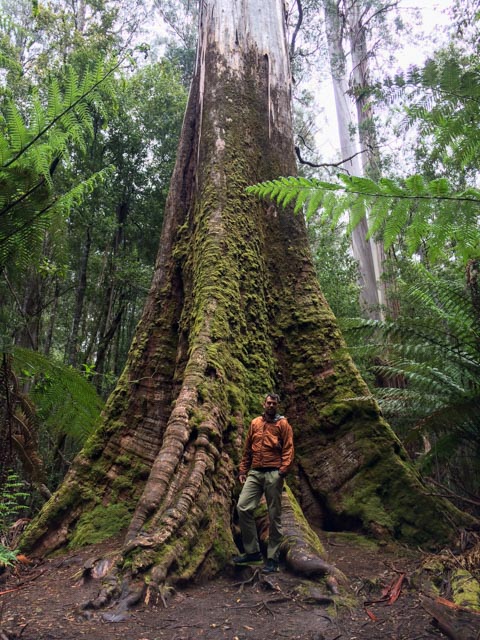
I grew up in beautiful Sydney, surrounded by tall trees, and otherwise on camping trips, hikes, or on my grandfathers farm. At school I developed a passion for maths. My current research and teaching combines three great passions: biology, maths, and coding. While I still live in Sydney, I’ve spent time living abroad in Norway and Austria, and also visiting researchers in France, Panama and the USA.
Education
- PhD, Macquarie University Australia (2010)
- MSc, Macquarie University Australia (2003)
- BSc, UNSW Australia (2000)
See my Research page for an overview of our four major research themes.
Summary of research outputs
Articles: > 90 articles in leading international journals such as Nature, PNAS, Trends in Ecology & Evolution, Biological Reviews, New Phytologist, Methods in Ecology & Evolution, Journal of Ecology, with over 95% in top-quartile journals.
Citations: > 22,900 total citations, > 1200 citations yr$^{-1}$, H-index of 47 [Google Scholar]; 33 papers cited more than 100 times.
Datasets: I co-lead “AusTraits: a curated plant trait database for the Australian flora” — now around 1.8 million records spanning ~500 traits and 30,000+ taxa, described by the Australian Research Data Commons as gold-standard, nationally significant data infrastructure. I have previously produced global compilations including the Biomass and Allometry Database and the Coral Traits Database.
Software: I produce and openly share widely used software, including the AusTraits family of tools (traits.build, APCalign, the AusTraits Plant Dictionary), the statistical package SMATR (used in over 1000 studies), and the growth model plant.
Reproducible science: I am making my publications entirely reproducible, enabling others to reproduce, adapt, apply and extend my results.
Research highlights
Global shift towards trait-based ecology: Enabled global quantification and comparison of plant strategies via four leading traits (Westoby et al 2002, 2256 cites) and quantifying trade-off in how plants function (e.g. Falster et al 2003, 409 cites, Zanne et al 2010, 290 cites).
How traits influence plant growth: New process-based models from my group show traits impact on growth (Falster et al 2011, 2018) and mortality (Camac et al 2018) of trees across diverse species.
Trait-based community assembly: My work shows how tradeoffs in plant function mediate species coexistence and how we can predict trait mixtures from first principles (Falster et al 2017, 33 cites).
Global rules of plant competition: Using growth data from > 3 million trees in plots across the world, Kunstler et al 2016 (345 cites) shows how functional traits influence competitive interactions.
Unified understanding of plant construction: Created world’s largest database on plant allometry (Falster et al 2015, 73 cites), improving estimates of Australian carbon stocks (Paul et al 2016, 57 cites).
Awards (2015-)
2025 UNSW Students’ Choice Teaching Award — one of five recipients from 241 nominations across the University.
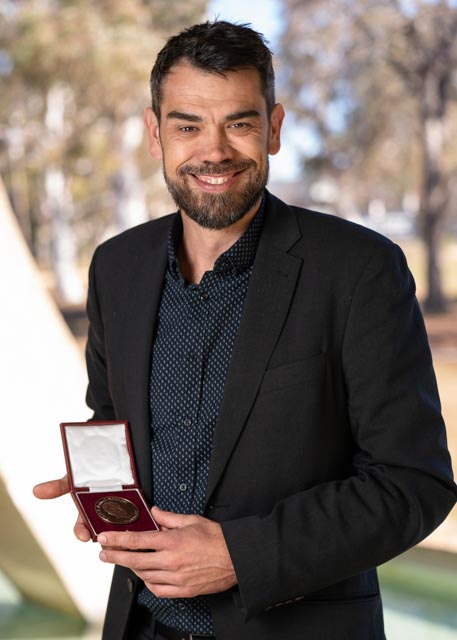
2019 Fenner Medal Australian Academy of Sciences, link
2015 Next Generation Ecologist, Ecological Society of Australia, link
Grants (2015-)
Over ~AUD 4M in competitive income since 2020. Recent grants include:
2023-2027 ARC Linkage, AUD 1.24M; lead CI, Improving long-term forecasts of tree growth in carbon farming projects (LP230100049; with partner Climate Friendly)
2024-2027 ARC Discovery, AUD 631,000; CI, Demography of plant heat tolerance (DP240100177)
2024 Australian Research Data Commons (Planet RDC), AUD 300,000; CI, sustaining and extending AusTraits
2020-2023 UNSW Research Infrastructure Scheme, AUD 327,000; CI, quality research software
2020-2022 ARC Discovery, AUD 483,977; CI, Escalating the arms race: Understanding when and how trees get really tall (DP200100555)
2017-2022 ARC Future Fellow, AUD 802,332; CI (100%), Niche 2.0 - Australian and global plant diversity from first principles
Recent government data commissions include trait uplift for NVIS (2025) and the HAVPlot harmonised vegetation-plot dataset (2026) for the Department of Climate Change, Energy, the Environment and Water, and a 2026 NSW Smart Sensing Network grant for space-enabled forest monitoring.