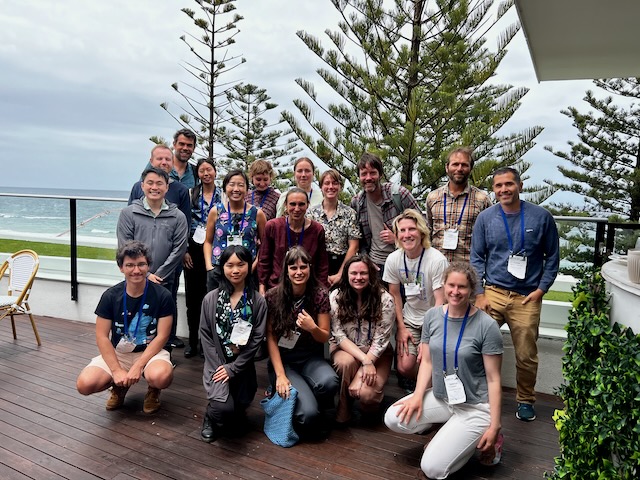
We are a vibrant lab with a focus on applying the latest computational methods to understanding species demography (especially size-structured dynamics), species distributions, and ecosystem structure and dynamics (especially biomass and carbon) from a process-based perspective. Potential areas of study include
- Understanding what drives trees to grow really tall,
- Size-structured population dynamics, including in vegetation and other systems; in particular understanding how competition for resources shapes species traits,
- Estimating and modelling the potential for carbon sequestration in vegetation, particularly under future climates.
Below are details on opportunities for open positions, potentials for PhD or Msc and honours projects. Past opportunities are listed here.
PhD and MSc students
I am interested in supervising students seeking to apply quantitative methods to answer fundamental and applied questions in ecology. If you are interested in joining the lab, please send a brief statement of research interests, along with a CV, to Daniel.
Australian & NZ students must be competitive for an Australian Government Research Training Program (RTP) Scholarship. Successful applicants generally have an Honours I mark or existing publications.
Unfortunately, due to limited pathways for stipends, I can only consider international students who have independent funding (for example, a scholarship from their home country or another external source).
Honours students
I am interested in supervising students seeking to strengthen their quantitative skills, in particular those who have studied some math (even just high school) and seek opportunities to apply this to biological questions. If you are interested in joining the lab, please send a brief statement of research interests, along with a CV, to Daniel.
Why join the lab
You will do cutting edge research on fascinating and fundamental biological problems, while also refining your skills in data analysis, coding, writing & presentation. You’ll also make great contacts and get inspired by the vibrant community within the Evolution and Ecology research Centre and UNSW’s School of Biological, Earth & Environmental Sciences.
Past members say that working in the Falster lab both challenged and inspired them.
The Falster & Cornwell labs (Aka Cornsters) at ESA 2022!